
The “Just This One File” Syndrome
Small recurring tasks, such as a weekly report, an approval chase or a retyped figure, cost a senior team more than one large task: they never get fixed, fragment attention and escape cost reviews. Added up by hand, the total is usually larger than expected.

Nobody sets out to build a team that spends its week on small admin. It happens one reasonable decision at a time. “I’ll just do this one file.” “I’ll just chase this one approval.” “I’ll just copy this one figure across.” Each is quick, each is sensible, and each is repeated every week. This article explains why those small tasks do more damage than one big one, and why they are so easy to miss.
01. Why small tasks are harder to fix than big ones
A large task attracts a decision. Someone asks whether it is worth doing, who should do it, and whether it can be done differently. A small recurring task attracts none of that.
No single small task is worth fixing, which is exactly why together they never get fixed. Each one is too small to justify a project, too routine to question and too short to notice. So it stays, and it is repeated.
02. What small tasks add up to
Take three tasks any senior person might recognise. The numbers are illustrative.
| Task | Time each | How often | Hours a year (46 weeks) |
|---|---|---|---|
| Weekly status report | 40 minutes | Once a week | 30.7 |
| Chasing an approval | 10 minutes | Every working day | 38.3 |
| Retyping a figure between systems | 15 minutes | Every working day | 57.5 |
| Total for one person | 126.5 |
Three small recurring tasks add up to about 127 hours a year for one person in this example. At eight hours a day, that is about 16 working days.
Now multiply by the team. For six people doing the same three tasks, that is 759 hours a year. At €100 an hour, that is €75,900 of team time, not €75,900 of cash. These are example numbers, not an Irish average. The point is the shape: none of the three rows looks like a problem, and the total is a figure nobody has seen.
03. Why cost reviews miss them
A cost review looks for big lines. Small recurring tasks have no line to find. Four reasons keep them out:
- They have no owner. The weekly report belongs to nobody’s budget, so nobody reviews its cost.
- They are spread across people. Each person loses a little, so no individual notices a lot.
- They are underestimated. A forty-minute task feels like ten when it is done without thinking.
- They are filed under “part of the job”. What is normal is not examined.
The result is that the costs most worth looking at are the ones a standard review is least likely to surface.
04. The cost people feel but do not count
There is also a cost that does not fit in a spreadsheet. Small tasks interrupt larger ones, and returning to the larger one takes time. A day made of fragments can end with the important work untouched, even though everyone was busy.
Senior people also become the connection between systems. They know where each figure lives, who must approve what, and which report needs which number. That knowledge is valuable. Spending it on copying and chasing is a poor use of it, and few people enjoy it. Teams rarely measure this either, but they usually recognise it.
05. How to see your own number
You do not need a project to start. You need one week.
- Ask each person to note every small recurring task, with the minutes it took, for five working days.
- For each task, note how often it happens in a normal week.
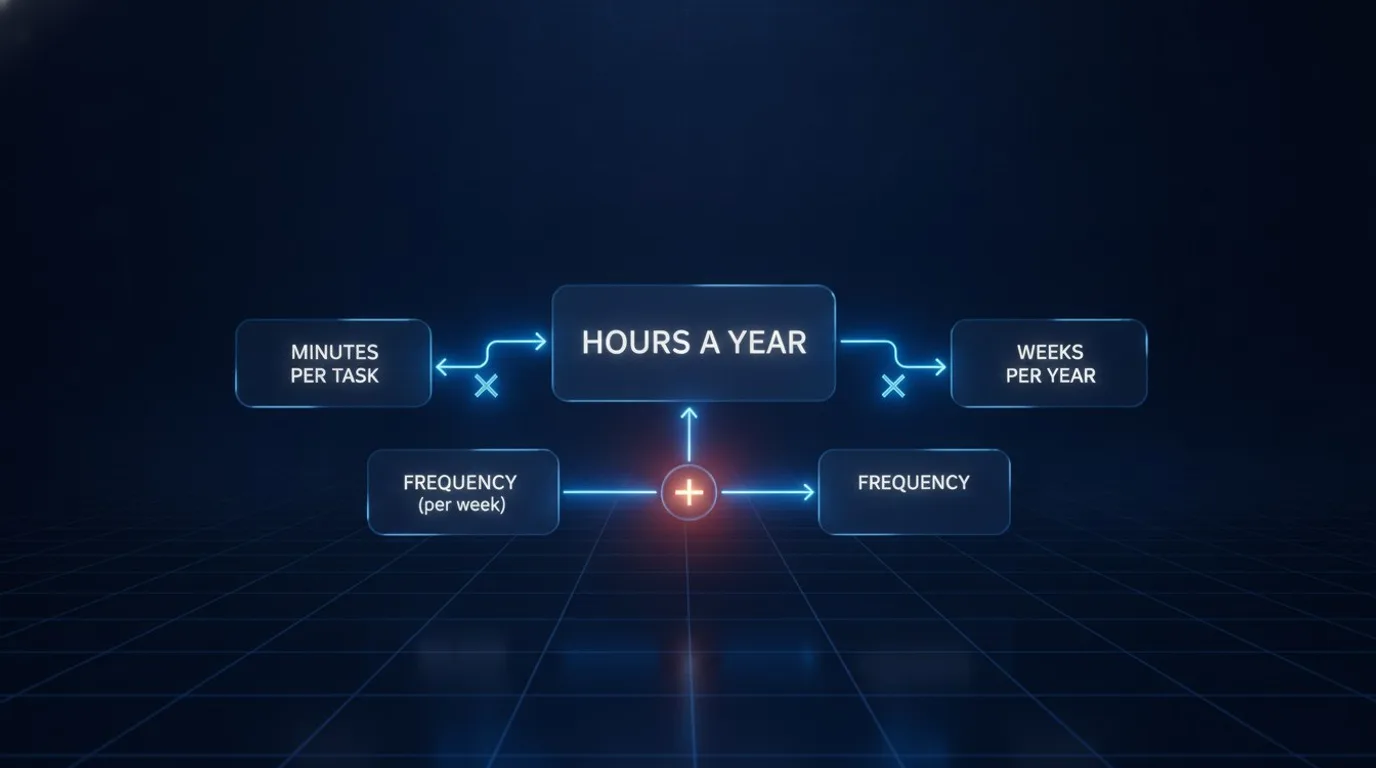
- Multiply minutes by frequency by about 46 working weeks, and add up the hours.
- Look at the three tasks that repeat most often. Not the largest, the most repeated.
The total is usually larger than the team expected. For a way to put a value on it, see expertise vs. data clerking.
06. Three questions for each task
For each small task, ask:
- Does it need to be done at all? Some reports are read by nobody.
- Does it need this person? If not, who or what could do it?
- Could the data come from where it already lives? If a figure exists in one system, it should not be typed into another.
Many small tasks survive the first question and fail the third. That is the ground a connected workflow covers.
07. Frequently asked questions
Why are small recurring tasks more damaging than one big task?
Because they never get fixed. Each is too small to justify a project, they interrupt larger work, and they are spread across people, so no one sees the total.
How do I find them?
Ask each person to note every small recurring task for a week, with minutes and frequency. Multiply, and add up the hours.
Why do cost reviews miss them?
Reviews look for large lines. Small tasks have no owner, no budget and are usually filed under “part of the job”.
Is this about replacing people?
No. It is about stopping experts’ time being spent on moving and chasing information that already exists.
08. Next step
See what a connected workflow looks like in practice. What we build → If one task stands out, discuss it as a workflow.